Our Farming Practices
Intro
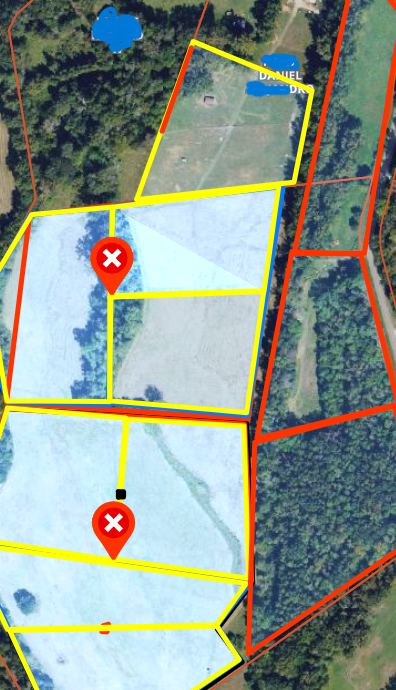
We want to explain how we practice regenerative agriculture. We manage our pastures using a 10-paddock system created with temporary electric wire, ensuring our livestock graze sustainably. Our goal is to be transparent about how our food is produced so we’ll share our methods, challenges, and the infrastructure that keeps it all running.
The Grazing Design
Our farm is currently divided into 10 paddocks designed to control stress on our pastures. There are several factors to determine when a paddock needs rest by moving animals away, they include:
- How much grass has been eaten or trampled?
- Is manure accumulating excessively?
- Are there bare spots exposing soil?
- Is the paddock too wet or dry?
- What’s the parasite pressure to high?
- Is there enough shade or shelter?
- How fast is the grass growing?
A simple rule of thumb guides us: when grass grows fast, we move livestock every 3–7 days, allowing 10+ weeks of rest per paddock. In cooler seasons, we extend rest periods as roots recover more slowly. Like our ancestors, we’re modern herders moving animals to fresh pastures.
Adapting to Challenges
Sometimes, we pause grazing during floods, droughts, infrastructure damage, or winter. During these times, we use a “sacrifice paddock”—a designated area that can be overgrazed and overstressed to protect the rest of the farm. With care, it recovers once normal rotation resumes.
Infrastructure Essentials
Water, shelter, and boundaries are critical. Water can be provided via buried lines, streams, swales, or hoses. Richard Perkins has an amazing book called Regenerative Agriculture, an amazing guide for anyone interested in growing great food. Minerals are also key infrastructure—most soils lack them. We supplement with Redmond’s Sea Salt, 60 trace minerals in biologically consistent concentrations the body. We plan to try Thorvin’s Sea Minerals from Icelandic kelp for added health benefits.
Raising Pigs Naturally
Unlike our rotational grazing, we raise pigs true to their nature—mud bathing, rooting, and eating insects and roots. We source non-GMO feed from Resaca Sun in Georgia. Their efforts
to grow crops that aren’t directly sprayed with herbicides is commendable. Non-GMO feed is mixed with donated grocery store produce, which results in healthy animals and flavorful, high-quality pork.